
How Do Migratory Patterns Affect Goose Control Strategies?
Does Migration Affect Goose Management Strategies?

Managing geese is a challenge in Columbus, Ohio, especially in parks, golf courses, and areas near water. While resident geese are a year-round issue, migratory geese passing through in the spring and fall add to the problem.
These seasonal migrations bring large numbers of birds into central Ohio, making control strategies more complicated. To effectively manage geese, it’s important to understand their migratory patterns and how they create population spikes at certain times of the year.
In this blog, we’ll explain how migration affects goose control strategies and what you can do to manage both resident and migratory geese on your property.
Canada Geese Migration Patterns
Canada geese are well known for their V-shaped flight formations during migration, flying south in the fall and north again in the spring. These North American birds follow regular routes between their breeding grounds in the north and wintering areas in the south. Columbus often lies directly in their path, making it a common stop for this migratory species.
During their migration seasons—fall (September to November) and spring (March to May)—the geese take advantage of Columbus’ parks, lakes, and golf courses for food and rest. This influx of wildlife adds to the geese already living here, making goose management a bigger challenge during these times.
Migration patterns have shifted slightly in recent years due to changes in climate and urban development. In some cases, warmer winters and abundant resources in cities like Columbus mean that more geese are staying here year-round instead of migrating. As a result, these birds are becoming a year-round problem, but especially during their migration seasons when their population spikes.
How Migratory Geese Affect Local Ecosystems and Public Spaces in Columbus

Migratory geese can cause significant problems for our local ecosystems and public spaces when they pass through Columbus. As they gather in our parks, golf courses, and near lakes, their feeding and nesting habits can lead to damage and health concerns:
Landscape Damage
Geese graze heavily on grass, which can leave behind bare patches in parks and sports fields, leading to expensive repairs. Their droppings add up quickly, making public areas like parks and golf courses unpleasant. Their droppings also increase the risk of spreading bacteria and parasites.
Water Contamination
In addition to damaging land, geese can also contaminate water bodies. Their droppings raise bacteria levels in lakes and ponds, which can harm aquatic wildlife and make the water unsafe for swimming and fishing.
Aggressive Behaviors
Beyond their environmental impact, migratory geese can also become aggressive, especially when they feel threatened or are protecting their young. This creates safety concerns in public areas like parks and walking trails.
Adapting Goose Control Strategies for Migratory Geese
It’s important to ramp up your goose management strategy during the seasons geese migrate. Migratory geese pass through the city in the spring and fall.
Short-Term Geese Control Efforts
Hazing techniques like noise devices, sprinklers, and visual deterrents work well during migration seasons to scare geese away. At Go Geese Go, we use our trained border collies to “herd” the geese and scare them away. Consistently using these methods during migration season can help you keep migratory geese off your property.
Long-Term Geese Control Efforts
Long-term solutions involve making your property less attractive to geese year-round. Habitat modifications, like planting tall grasses around ponds, make the environment less appealing for geese to feed or nest. You can also install pond aerators, add fencing or barriers near water sources, and limit food sources by discouraging people from feeding them. These strategies work for both resident and migratory geese.
Timing and Legal Considerations
Your control measures should be in place before the migratory geese arrive. Once they settle, it’s much harder to remove them. You can minimize the impact of migratory geese on your property by staying ahead of the migration.
It’s also important to follow legal guidelines, as Canada geese are protected under the Migratory Bird Treaty Act. Non-lethal methods like hazing, deterrents, habitat modifications, and using dogs to herd the geese are safe, effective, and compliant with regulations.
Common Mistakes in Goose Control During Migration Seasons
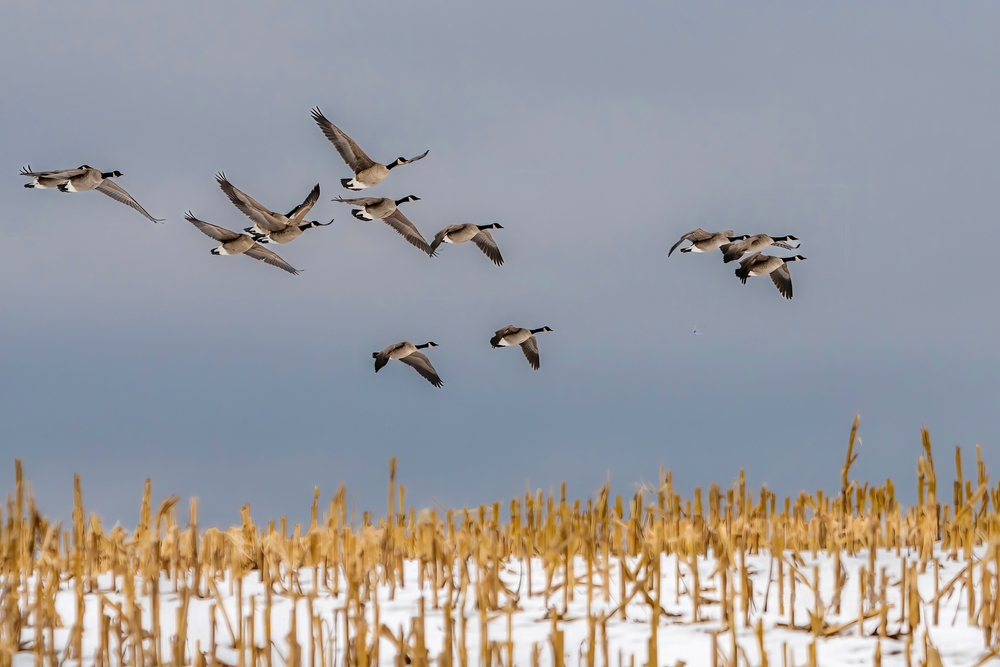
Managing geese during migration seasons can be tricky, and many property owners make the same mistakes. Here are some of the most common errors and how to avoid them:
Waiting Too Long to Start Control Efforts
One of the biggest mistakes is waiting until geese have already arrived and settled before starting control measures. Once geese have chosen a spot to rest and feed, it’s much harder to move them. To avoid this, start using deterrents before bird migration season begins. This way, you can discourage the geese from stopping in the first place.
Using Ineffective or Inconsistent Deterrents
Not all deterrents work for every situation. For example, using visual deterrents like scarecrows or balloons might scare geese at first, but if they aren’t moved regularly, geese quickly get used to them. It’s important to use a mix of methods like sound devices, trained dogs, or habitat modifications, and to switch things up to keep the geese wary.
Overlooking Habitat Modifications
Many people rely only on hazing or deterrents, but ignoring habitat modifications is a missed opportunity. Simple changes, like planting tall grasses around ponds or installing pond aerators, can make areas less appealing to geese. Geese prefer open spaces with easy access to water, so making these spaces less attractive can be an effective long-term solution.
Ignoring Legal Restrictions
Canada geese are protected under the Migratory Bird Treaty Act, and certain methods of control, like capturing or harming geese, are illegal without special permits. Always use non-lethal methods, such as hazing, habitat management, and repellents, and check the regulations before taking action.
Building an Effective, Migration-Informed Bird Control Plan
Migratory geese passing through the city during the spring and fall increase the number of birds, making control efforts more challenging. You can reduce the impact of migratory geese by adapting your strategies to their migration patterns.
Seasonal methods, like hazing and deterrents, work best during migration, while long-term solutions like habitat modification can help manage geese year-round. Timing is key—putting control measures in place before the migratory geese arrive will give you the best results.
To handle these challenges, it’s often best to partner with professional goose control experts like our team at Go Geese Go. We understand the migratory behavior of these animals and can offer you customized solutions for your property that follow legal guidelines and are proven to work.
Keep Geese Off Your Property Year-Round with Go Geese Go
Looking for a company that can take care of your goose problems? Leave the job to us. Our team of border collies is trained to keep geese away from your property year-round. Here’s how it works:
When you partner with Go Geese Go, we’ll visit your property twice a day, usually from February through October, but we also offer geese control all year if needed. Our herding dogs are well trained to move the geese, using their natural instincts to follow and scare them away. The geese see the dogs as a threat, but the dogs’ goal is simply to herd them. Over time, the geese learn that our dogs “own” the area and decide to stay away. This is the most humane way to remove geese and keep them off your property.
We use border collies for this job because they are smart, athletic, and full of energy. They have great herding skills and truly enjoy their work. Border collies use what’s called the “herding eye,” which is an intense stare they use to stalk their prey. When the time is right, the dogs make their move, and the geese take off.
Our border collies are trained by one of the top dog trainers in the country. Before joining our team, our dogs go through both obedience and herding training. When not working, our dogs relax in a heated and air-conditioned building and have five acres of fenced land to play in.
We’re here to help if you’re struggling with geese and need a better solution. Contact us today to learn more.
Contact Go Geese Go Today
Ready to take the hassle out of goose control? Let our team of trained border collies handle your goose problem for you. With our proven, humane methods, you can enjoy a goose-free property without the stress. Contact us today to schedule a consultation and let us help you keep your property clean, safe, and goose-free year-round!